Dangote Warns Refinery Opponents as $16 billion Lamu Project Breaks Ground
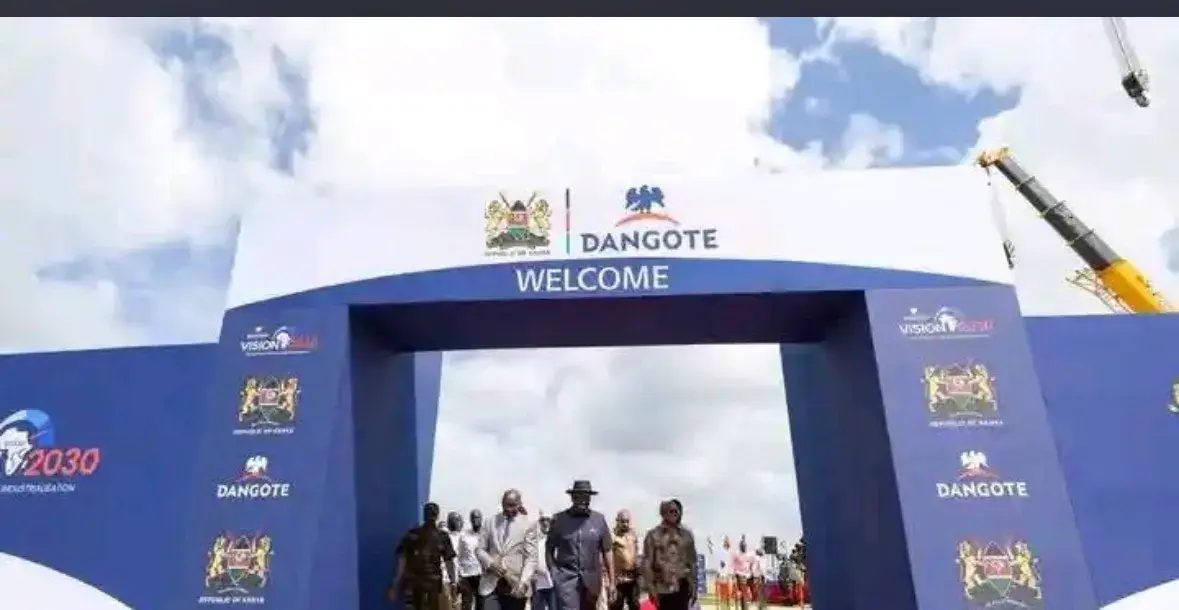
Nigerian billionaire Aliko Dangote warned those seeking to obstruct his planned $16 billion refinery in Kenya that he was prepared to confront them head-on, as he and President William Ruto broke ground on the project in Lamu on Wednesday.
Dangote, whose group is investing in the project, said he was not deterred by court cases or opposition to the refinery, which is expected to become one of Africa’s largest refining facilities when completed.
“We are not really scared about people taking us to court. Anybody who wants to cause trouble, we are ready for his trouble and we will give him a headache,” Dangote told the launch ceremony.
The warning came amid legal challenges and opposition from some local residents over land and environmental concerns. A Kenyan court has ordered the preservation of disputed parts of the site pending further proceedings.
Dangote said such challenges would not derail the project, which he expects to complete within 40 months.
“We have actually travelled that road before. We know it will not be easy. There will be challenges,” he said.
Ruto backed the project and said his government would protect the investment while addressing concerns raised by residents over land, jobs and the environmental impact.
The groundbreaking brought together an unusually large gathering of African leaders, underlining the regional ambitions of the refinery. Uganda’s President Yoweri Museveni, Ethiopian Prime Minister Abiy Ahmed, Togo’s President Jean-Lucien Savi de Tové and Benin’s President Romuald Wadagni attended, alongside former Nigerian president Olusegun Obasanjo and senior Kenyan officials.
The refinery, to be built near Lamu Port along the Lamu Port-South Sudan-Ethiopia Transport (LAPSSET) Corridor, is designed to process 700,000 barrels of crude oil a day. Construction is expected to be completed around 2030.
Modelled partly on Dangote’s 700,000-barrel-per-day refinery in Lagos, the Kenyan facility is intended to reduce East Africa’s dependence on imported refined petroleum products and provide a major outlet for crude produced in the region, including Kenya’s Turkana oil.
The project is expected to include a 1,000-megawatt power plant and support related industries including petrochemicals, chemicals and fertiliser production. Officials say it could create tens of thousands of jobs and stimulate businesses ranging from transport and logistics to accommodation and retail.
Its location at Lamu is also strategically important. The refinery is expected to strengthen the LAPSSET corridor and position Kenya as an energy and industrial hub serving markets stretching from Ethiopia to Mozambique.
East Africa’s vulnerability to international fuel shocks has become increasingly apparent as geopolitical conflicts disrupt global energy supplies. A large domestic refinery could allow the region to retain more value from its crude resources while reducing its exposure to fluctuations in international refined-fuel markets.
Dangote’s project nevertheless faces questions over land rights, environmental safeguards, crude supply and the infrastructure needed to support such a large facility.
At the launch, Dangote sought to make clear that those challenges would not change his commitment to the project.
“We will come back and commission this refinery 40 months from today,” he said, adding that the company would establish a training school in Lamu to prepare local workers for jobs created by the project.
gandae@businessdayafrica.org