Ruto Challenges UN over Wars as Africa Bears Energy Costs
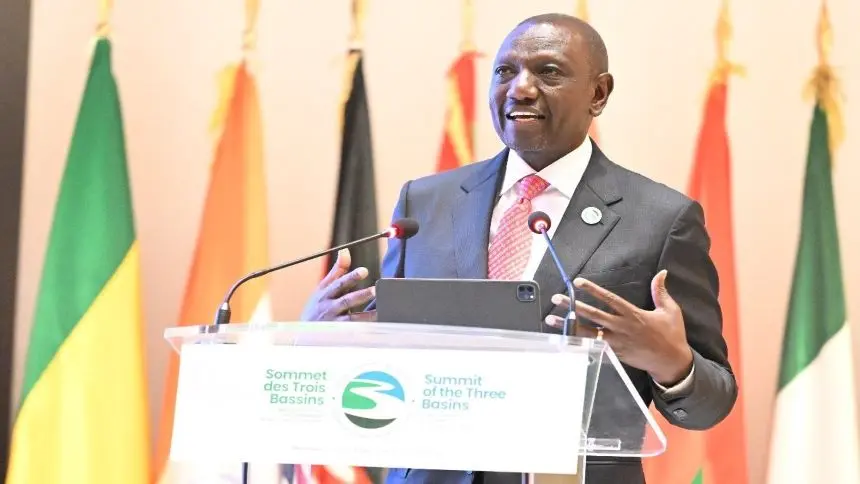
NEW YORK, Sept 23 — Kenyan President William Ruto used his address to the United Nations General Assembly on Wednesday to question the effectiveness of the global body as wars rage across several regions, saying the institution must adapt to a changing world.
Ruto said the United Nations had played an important role in resolving conflicts and supporting countries emerging from war, but acknowledged that it had fallen short of the ambitions set out when it was founded.
He pointed to conflicts in the Middle East, Ukraine, Sudan and elsewhere as evidence of the growing challenge facing the international system, warning that continued wars were undermining global stability and development.
“The United Nations has not fulfilled every promise of its charter,” Ruto said, while arguing that the world would be more dangerous without the organisation.
His remarks came as leaders gathered in New York for the annual General Assembly against a backdrop of heightened geopolitical tensions and a growing global economic fallout from war.
For Africa, the consequences have been particularly severe. The continent is heavily dependent on imported fuel and remains vulnerable to disruptions in global energy and shipping markets.
The conflict in the Middle East has disrupted oil supplies and shipping routes, pushing up fuel, transport and food costs and adding to inflationary pressures across African economies.
Higher oil prices are particularly damaging for countries already facing high debt, weak currencies and limited fiscal space. Rising fuel costs feed into nearly every part of the economy, from transport and electricity to agriculture and the price of basic goods.
Kenya has been forced to contend with higher fuel costs as global markets absorb the impact of the conflict, putting additional pressure on households already struggling with the cost of living.
The crisis has also exposed Africa’s vulnerability to decisions made far beyond the continent. While wars in Europe and the Middle East may be geographically distant, their economic consequences are quickly transmitted through energy, food, shipping and financial markets.
Ruto has repeatedly called for reforms of global institutions, arguing that Africa needs a greater voice in international decision-making. He has particularly criticised the composition of the UN Security Council, which gives permanent seats and veto powers to five countries while Africa has no permanent representation.
His address therefore placed the UN’s credibility alongside the wider question of whether the global system adequately represents developing countries that often bear the economic consequences of conflicts they did not cause.
As leaders debate wars, security and global governance in New York, African governments face a more immediate challenge: protecting their economies and populations from another round of imported inflation triggered by conflicts far beyond their borders.
For Africa, the cost of war is increasingly being measured not only in lives lost and communities displaced, but also in the price of fuel, food and transport.