Zimbabwe’s Mnangagwa Moves to Extend Rule to 2030, Joining Africa’s Long-Ruling Leaders
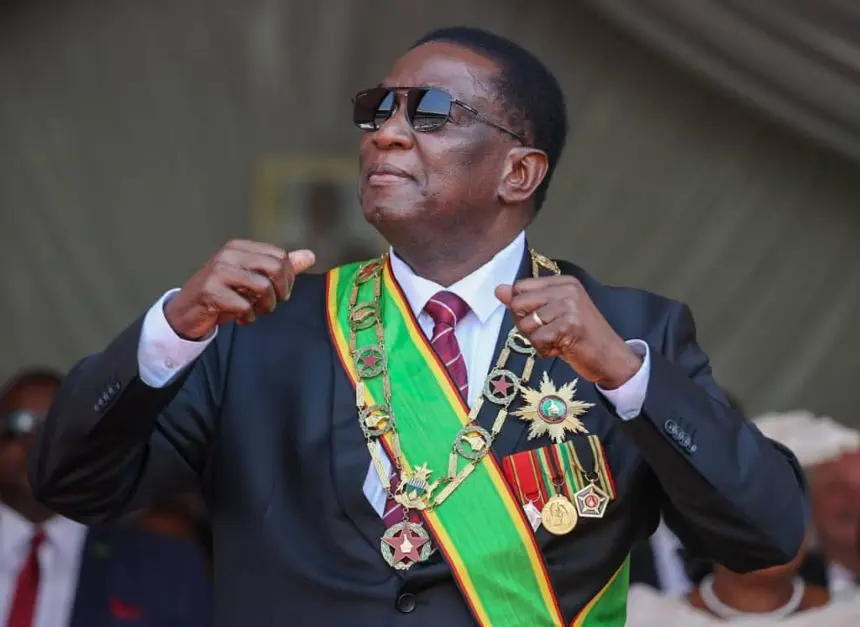
Zimbabwe’s ruling party has begun the process of extending President Emmerson Mnangagwa’s rule to 2030, a move that would make him one of Africa’s longest-serving leaders and place him among peers who have changed constitutions to stay in power.
The motion, adopted by the Zimbabwe African National Union-Patriotic Front (ZANU-PF) at its annual conference in the eastern city of Mutare, calls for constitutional amendments to prolong Mnangagwa’s second and final term by two years. Under the 2013 constitution, a president is limited to two five-year terms, meaning Mnangagwa’s tenure is set to end in 2028.
Party officials say the proposal reflects Mnangagwa’s “transformational leadership,” while opposition groups accuse him of seeking to entrench one-party rule.
The plan would require changes to the constitution and approval by Parliament, where ZANU-PF holds a majority.
The move echoes similar actions by leaders elsewhere on the continent.
Cameroon’s Paul Biya scrapped term limits in 2008, allowing him to rule for over four decades.
In Rwanda, Paul Kagame won a 2015 referendum that could see him remain in office until 2034.
Uganda’s Yoweri Museveni removed age and term limits in 2017, extending a presidency that began in 1986.
Burundi’s late Pierre Nkurunziza and Djibouti’s Ismaïl Omar Guelleh also changed constitutions to prolong their stays.
Mnangagwa, 83, came to power in November 2017 after a military intervention forced long-time leader Robert Mugabe to resign.
A former intelligence chief and Mugabe ally, he was sworn in promising reform and reconciliation, but critics say his government has continued a pattern of political repression and economic mismanagement.
The proposal to extend his rule has exposed rifts within ZANU-PF, with some members backing Vice President Constantino Chiwenga, the former army general who helped oust Mugabe, as a possible successor.
Legal experts warn that extending the term could test the limits of Zimbabwe’s constitutional framework.
“If implemented, it would amount to a de facto third term,” said Harare-based analyst Pedzisai Ruhanya as quoted by the international press.
Mnangagwa has previously said he would respect term limits, but the new push signals a shift that could redefine Zimbabwe’s political future — and further blur the line between liberation legacy and entrenched power.
gandae@businessdayafrica.org