Ethiopia-Eritrea Rift Deepens East Africa Security Crisis
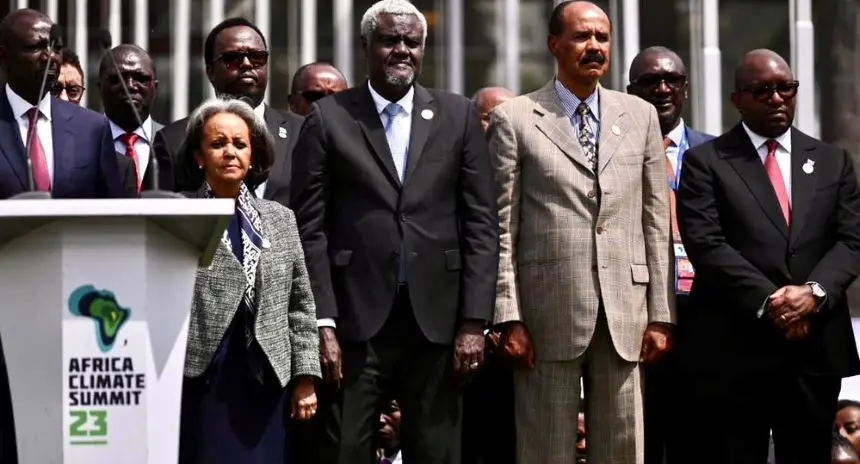
Ethiopia’s renewed conflict in Tigray and its deteriorating relations with Eritrea are adding another dangerous layer to an already fragile East Africa, where wars in Sudan and South Sudan and the unresolved M23 conflict in eastern Democratic Republic of Congo continue to threaten regional stability.
The crisis comes as Prime Minister Abiy Ahmed begins a new five-year term, facing the difficult task of containing renewed fighting while preventing Ethiopia’s internal conflicts from spilling across its borders.
Ethiopia and Eritrea have again become adversaries after years of rapprochement. The two countries fought a devastating border war from 1998 to 2000 before Abiy’s 2018 peace initiative restored diplomatic ties and reopened their border.
That reconciliation earned Abiy the Nobel Peace Prize in 2019 and briefly made Ethiopia and Eritrea a symbol of peace in a region accustomed to conflict.
But the relationship has deteriorated sharply.
The latest tensions are closely linked to renewed fighting in Tigray, where the Tigray People’s Liberation Front has again clashed with federal forces. The two sides signed a peace agreement in 2022 that ended a two-year war estimated to have killed hundreds of thousands of people through fighting, hunger and disease.
The return of fighting has raised fears of a broader confrontation involving Eritrea, which fought alongside Ethiopian government forces during the Tigray war.
The dispute also has a strategic dimension. Ethiopia, one of Africa’s most populous countries, lost its coastline after Eritrea became independent in 1993 and has increasingly sought reliable access to the Red Sea. Eritrea, meanwhile, views Ethiopian ambitions for maritime access with deep suspicion.
The danger comes as the wider region struggles with several other wars.
Sudan has been devastated by fighting between the army and the Rapid Support Forces since 2023, creating one of the world’s largest displacement crises and drawing neighbouring states into competing alliances.
South Sudan, which gained independence in 2011 after decades of war, continues to struggle with political rivalry and periodic violence despite repeated peace agreements.
In Somalia, the government and its regional partners remain locked in a long-running battle against al-Shabaab, while Ethiopia continues to have major security interests in the country.
Further south, eastern Congo remains trapped in conflict involving the M23 rebellion and other armed groups. M23 has captured large areas of North and South Kivu, while diplomatic efforts involving Congo, Rwanda and international mediators have struggled to produce a durable settlement.
For Abiy, the challenge is therefore bigger than Tigray.
He must prevent renewed fighting from becoming another full-scale Ethiopian civil war while managing tensions with Eritrea and Ethiopia’s other armed opposition groups. At the same time, Addis Ababa must navigate the wars surrounding it without becoming directly drawn into them.
Abiy enters his new term with a strong parliamentary mandate, but insecurity has prevented voting in some parts of the country.
The irony is difficult to ignore. A leader who won the Nobel Peace Prize after ending Ethiopia’s confrontation with Eritrea now begins another term with the two countries again locked in a dangerous diplomatic and security confrontation.
For East Africa, the concern is that the region may be approaching a point where its separate conflicts begin reinforcing one another.
A renewed Ethiopia-Eritrea war could further destabilise the Horn of Africa, complicate Red Sea security and create new alliances among armed groups across borders.
With Sudan already at war, Somalia battling al-Shabaab, South Sudan facing renewed political instability and eastern Congo still grappling with the M23 rebellion, Ethiopia’s crisis could become another link in a chain of conflicts stretching across much of Africa’s eastern corridor.
gandae@businessdayafrica.org