Ruto Calls Emergency EAC Summit Over Funding Crisis
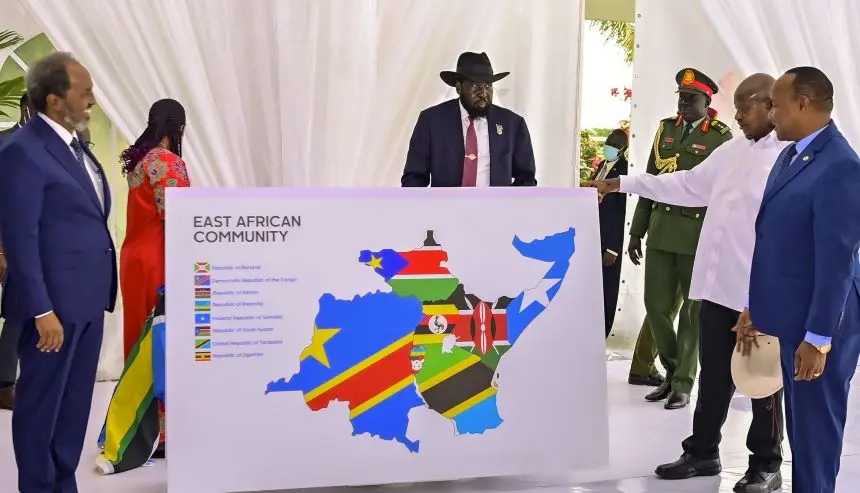
Kenyan President William Ruto has called an emergency meeting of East African leaders to address a widening funding gap that officials say is threatening to cripple the operations of the East African Community (EAC), the region’s economic bloc.
Ruto, who chairs the EAC summit of heads of state, is seeking urgent consultations with leaders of Tanzania, Uganda, Rwanda, Burundi, South Sudan, the Democratic Republic of Congo and Somalia after months of delayed budget remittances left the organisation struggling to meet its financial obligations.
The EAC, headquartered in Arusha, Tanzania, relies largely on annual contributions from partner states to finance its activities, including legislative work, judicial functions and implementation of regional integration projects.
Persistent arrears from several member states have left the bloc with a substantial budget deficit, forcing it to scale back programmes and delay payments.
Officials familiar with the matter said the shortfall has disrupted operations at key organs such as the East African Legislative Assembly and the East African Court of Justice, while routine administrative functions at the secretariat have also been affected.
Some staff payments and statutory meetings have reportedly been postponed as liquidity pressures mount.
The funding strain has long dogged the community, particularly since its expansion from the original three members — Kenya, Tanzania and Uganda — to eight countries with varying fiscal capacities.
While the bloc has made strides in establishing a customs union, a common market and discussions toward monetary union, its financing structure has remained heavily dependent on equal contributions from partner states, regardless of economic size.
Kenya and Tanzania are understood to have largely met their obligations in the current financial year, while several other members are in arrears.
Diplomats say economic pressures at home, competing budget priorities and political transitions in some capitals have compounded the problem.
Analysts say the crisis highlights structural weaknesses in the bloc’s funding model, which has been debated for years without a lasting solution.
Proposals to link contributions to gross domestic product or introduce alternative revenue streams, such as regional levies, have faced resistance from some member states concerned about higher financial burdens.
The emergency summit is expected to focus on agreeing a sustainable financing formula and setting clear timelines for clearing arrears.
Leaders are also likely to consider measures to prevent recurrent crises that risk undermining confidence in the bloc’s institutions.
The EAC has positioned itself as a key driver of regional trade and political cooperation in East Africa, but officials warn that without predictable financing, its integration agenda could stall at a time when member states are seeking deeper economic ties and collective responses to security and economic challenges.
ligadwah@businessdayafrica.org