Kenya Presses China to Scrap Tariffs on Coffee, Tea and Avocados Amid Export Surge
Kenya has renewed pressure on China to remove steep tariffs on its agricultural exports, seeking to unlock long-delayed market access for coffee, tea, avocados and a range of other produce as the country moves to narrow a wide trade imbalance.
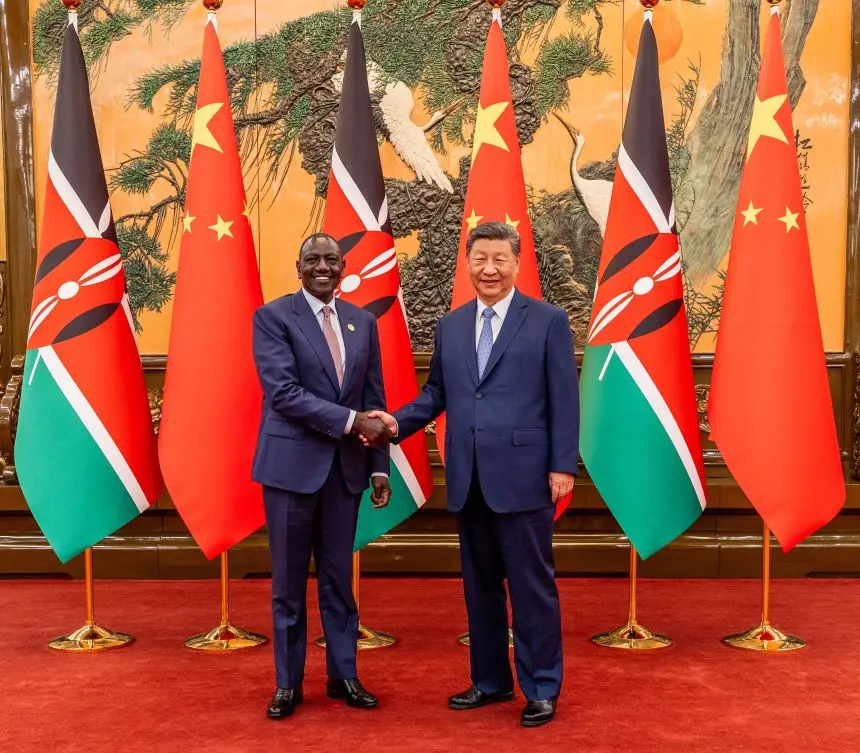
Cabinet Secretary Mutahi Kagwe met senior officials from the General Administration of China Customs (GACC) in Nairobi, urging Beijing to fast-track approvals and deliver on commitments made during President William Ruto’s meeting with President Xi Jinping in Beijing earlier this year.
Kagwe said Kenya faces duties of eight percent on non-roasted coffee, 20 percent on roasted coffee, 15 percent on tea and up to 20 percent on avocados — charges he argued weaken the competitiveness of Kenyan farmers in a market where demand for premium produce has been growing.
“These tariffs are holding back our farmers,” Kagwe told the Chinese delegation. “It is time to move from commitments to action so that Kenyan produce can compete fairly in the Chinese market.”
Imports from China stood at about $4.5 billion in 2024, compared with roughly $290 million in Kenyan exports, largely raw agricultural commodities.
Kagwe described the gap as “unsustainable” and said eliminating tariffs was the first step toward rebalancing the flow of goods.
“Our trade is heavily skewed, and we must correct it through urgent, deliberate measures,” he said. “Kenya has fulfilled its obligations. We are only waiting for China’s final approvals.”
Kenya is finalising a bilateral framework with China that would remove duties on major agricultural goods, but the CS said implementation has stalled, heightening anxiety among farmers and exporters who have waited years for expanded access.
He said Kenya has already completed technical submissions for several products, with the Kenya Plant Health Inspectorate Service confirming readiness of protocols for fresh mangoes, dried chillies, green grams, dried fruits and plant-derived medicinal materials, all pending sign-off by GACC.
Kagwe also pushed for progress on livestock products, including meat exports that have been awaiting clearance for more than two years. Allowing Kenyan livestock products into China, he said, would mark “a historic breakthrough” for rural producers.
Beyond tariffs, Kenya is seeking deeper cooperation with China in agricultural research, value-chain upgrading and laboratory strengthening, alongside exchanges of scientists and technical staff.
“Kenya is ready and aligned,” Kagwe added. “It is time for policies to translate into real volumes, real containers and real opportunities for our farmers in the Chinese market.”
news@businessdayafrica.org