Ethiopia Expands Aviation Edge with $150M MRO Facility as Kenya's JKIA Stalls

Ethiopia’s new $150 million aircraft maintenance hub in Addis Ababa has cemented its position as a rising force in Africa’s aviation sector and placing it on course to eclipse Kenya as the region’s main air transport hub.
Ethiopian Airlines said its new Maintenance, Repair and Overhaul (MRO) facility, which became operational this month, features two wide-body hangars, a fully equipped aircraft component shop, and a high-capacity aircraft parts warehouse.
The project, part of the carrier’s long-term Vision 2035 strategy, aims to reduce aircraft downtime and serve both Ethiopian’s growing fleet and third-party airlines across Africa. It comes months after Boeing opened its regional headquarters in Addis Ababa, further anchoring the city’s role in the continent’s aviation future.
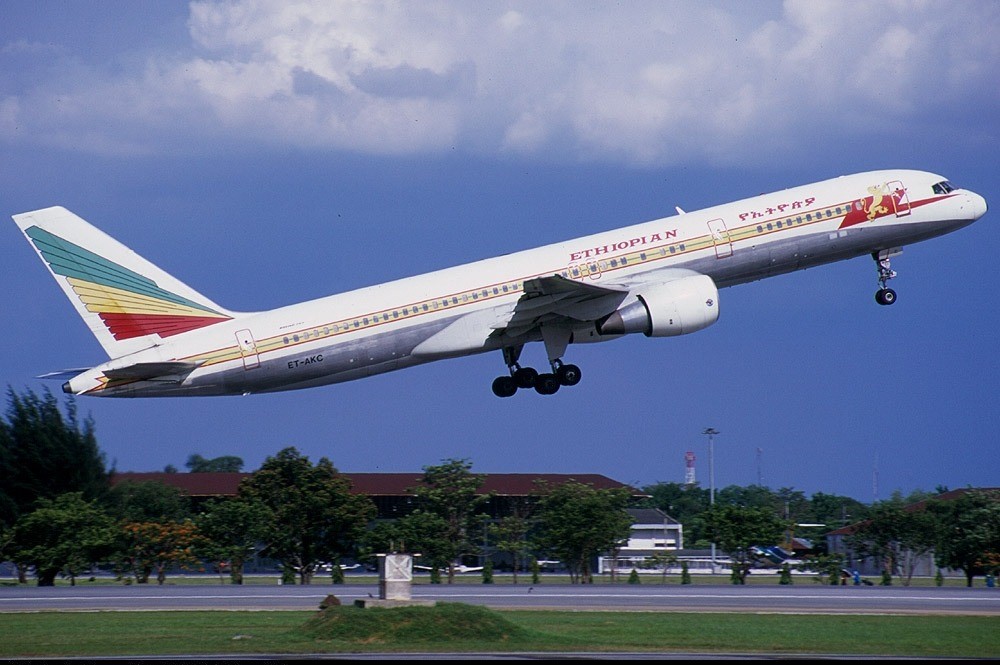
ET aircraft. Image: Courtesy.
The launch is a fresh blow to Kenya’s efforts to maintain its dominance in regional aviation. Its long-planned expansion of Nairobi’s Jomo Kenyatta International Airport (JKIA) has repeatedly faltered, with the most recent setback involving the cancellation of a proposed $2 billion partnership with India’s Adani Group.
Kenya scrapped the controversial deal in November 2024 after a Nairobi court suspended the contract following legal challenges and mounting public opposition.
Critics questioned the transparency of the agreement and cited concerns over Adani’s financial and legal troubles abroad, including US federal indictments against its executives.
The government had hoped the deal would fund the construction of a second runway and modern terminals to relieve congestion at JKIA, which handles over 7 million passengers annually.
Transport officials have since said they are seeking new investors to revive the expansion plan.
Ethiopia’s latest investment adds to a string of wins for its flagship carrier, which has already met targets under its earlier Vision 2025 blueprint.
The airline is now pursuing an ambitious target of expanding its fleet to 271 aircraft and serving 65 million passengers annually by 2035, up from 13.9 million in 2023.
By contrast, Kenya Airways continues to struggle with mounting losses, despite being a key strategic asset for the country.
The carrier relies on foreign maintenance support and has no comparable in-house MRO capacity.
Ethiopian Airlines’ new facility is expected to significantly cut maintenance costs and turnaround time for African operators, which currently depend on services in Europe and the Middle East.
The last time Kenya attempted major airport expansion was in 2012, when it announced plans for a new $653 million Greenfield terminal at JKIA.
That project was terminated in 2016 due to funding shortfalls and legal disputes.
Opposition leader Raila Odinga has criticised the the country for failing to develop JKIA into a world-class hub, warning that Nairobi risks falling behind as neighbouring countries, including Ethiopia and Rwanda, move ahead with airport investments and strategic aviation partnerships.
Ethiopia’s latest MRO investment and its growing collaboration with global aviation firms come as African airlines seek to expand amid rising demand and limited infrastructure.
According to the International Air Transport Association (IATA), Africa is poised to be one of the fastest-growing aviation markets over the next two decades.
But analysts say regional competitiveness will depend heavily on countries’ ability to modernise their infrastructure and attract private capital.
gandae@businessdayafrica.org